Garlic and Fennel-seed Studded Pork Roast

>> Wednesday, April 29, 2015


Garlic and Fennel-seed Studded Pork Roast


Jenn and Jessie, one of these days you'll probably want to make a pork roast for a special dinner or a holiday. In fact, you could invite your parents over for Mother's Day (second Sunday in May) and serve them this wonderful roast with gravy, and of course, plenty of mashed potatoes.

Fennel seed is the fragrant seasoning in many sausages. It seems to naturally pair up with pork. Adding ground ginger and mustard gives the meat a bit of tang.


Ingredients

1 3-4 pound pork roast
2 garlic cloves, slivered
2 tsp fennel seed
1 tsp ground ginger
2 tsp dry mustard
2 tsp ground black pepper
2 1/2 cups beef broth, divided
1 tbsp corn starch
2 tbsp cold water

Directions

Preheat the oven to 300 degrees.

With a sharp knife, deeply pierce the fat layer in one or two inch rows all over the pork roast. Insert a sliver of garlic and one or two fennel seeds into each piercing. Stir together the mustard and ginger and sprinkle it all over the meat.


Pork roast stuffed with garlic and fennel seeds

In an oven proof pan, brown the meat on all sides. Pour one cup of hot beef broth over the roast, cover, and put it in the oven. Roast it for 30 minutes per pound, basting occasionally. Add more liquid if it boils away. The roast is done when it is no longer pink deep in the middle, or when a meat thermometer inserted in the center of the meat reads 160-170 degrees. You do have a meat thermometer, don't you? If you do, make sure you don't roast the plastic meat thermometer sleeve, like I did the first time I used one.

Pork roast braising in Dutch oven


Remove the meat from the pan, place it on a cutting board, and cover with foil. Put the roasting pan on the stove and turn on medium heat. Pour the rest of the beef broth into the pan and bring it to a boil, scraping off the rich crusty bits from the bottom of the pan. Stir together the corn starch and water, then slowly pour it into the sauce while stirring constantly. Allow it to simmer until thickened into gravy.

Carve the roast and pour any juices from the cutting board back into the gravy. Serve with the gravy on the side.

Serves 6-8, depending on the size of the roast.

Read more...

Dill Pickle Roasted Chickpeas

>> Wednesday, April 22, 2015


Dill Pickle Roasted Chickpeas


Everybody's all about roasted chickpeas lately, but my sister Beth, who is the Queen of Dill Pickles, had an idea for pickle-flavored roasted chickpeas. How could that be wrong?

Roasting chickpeas is a little more complicated than the recipes that say pop them in the oven for 45 minutes and they come out crunchy and yummy. The best method seems to be to roast them for half the time period, take them out and let them cool 10 minutes, then roast them the rest of the way. This allows the inside of those little beauties to reach maximum crispiness.

This recipe is great to make after you've just finished a jar of pickles. Don't throw away the brine - marinate the chickpeas, then roast them up.

Ingredients

1 28-oz can cooked chickpeas, drained and rinsed
1 1/4 cups pickle brine
1/4 cup white vinegar
1 clove garlic, minced
1 tbsp sea salt
1 tsp dill
Pepper to taste

Instructions

Preheat the oven to 375 degrees. Spray a cookie sheet with oil.

Place the chickpeas in a saucepan and add the brine, vinegar, and garlic. Bring to a boil, then turn off heat and let the garbanzos soak for at least 15 minutes. The longer you marinate them, the more flavorful they'll be after roasting. Alternatively, you can put the beans and dill pickle brine in a jar and soak them in the refrigerator, then drain them and roast.

Drain the beans thoroughly. Spread onto the cookie sheet and roast for 10 minutes. Stir and turn the sheet. Roast for 10 more minutes, then remove from the oven and let cool 10 minutes. Sprinkle with salt, pepper, and dill, and roast 15 more minutes, or until crunchy and slightly browned.

Allow to cool before sealing in an airtight bag or jar.

Makes about 3 cups.

Read more...

Bouillabaisse (French Fish Soup)

>> Friday, April 10, 2015


Bouillabaisse (French Fish Stew)
Bouillabaisse, we have conquered you.

Quite a few times we've said, "We should really try bouillabaisse;" then we open Julia Child's cookbook and shake our heads at the 3 pages of directions.

But my beloved F. Scott Fitzgerald mentioned bouillabaisse in his legendary novel about Americans living in the French Riveria: "The Divers went to Nice and dined on a bouillabaisse, which is a stew of rock fish and small lobsters, highly seasoned with saffron, and a bottle of cold Chablis....with the burn and chill of the spiced broth and the parching wine they talked."

 I'll never be young and rich in Nice as the Divers were in "Tender is the Night", but I can eat like them.

Basically, bouillabaisse is a quick soup of fresh leftovers from the fisherman's end of market day. They brought home what didn't sell and cut it up into the pot with some broth, tomatoes, and spices. Julia Child, and some other French cooks, make a bigger science out of it by suggesting you use 5 kinds of fish - some lean, some flaky, some firm-fleshed, and perhaps shellfish. We used fish that was on sale and that we knew we liked.

lobster and vegetable scraps for seafood broth
Lobster Boy wants to know what's for dinner.
Of course, Joe likes to take it up just a notch and make his own broth. This time he used vegetable scraps we'd been storing in the freezer, and the shell of a lobster we had when frozen lobster got down to $2.29 a pound last month (ridiculously cheap, right?).

By all means, make this as simple or elaborate as you want. If you're going for elaborate, do not miss the vegetable-herb sauce called rouille. It add a huge pop of flavor to a simple fish soup.

Ingredients

For the Bouillabaisse:

1 cup leeks, julienned
3 cups tomatoes, peeled, seeded, and chopped
1 cup fennel, julienned
2 tablespoons garlic, chopped
1 tsp red pepper flakes (or more to taste)
Salt and pepper
6 cups fish broth, OR 4 cups chicken broth and 1 12-oz bottle clam juice
2 lbs assorted fresh fish fillets
1 1/2 cups lobster meat (or any other shellfish)
1/2 pound mussels
Salt and pepper
1 tsp saffron
 12 slices of crusty French bread

For the Rouille:

2/3 cup roasted red peppers
2 cloves garlic, minced
2 tbsp parsley, finely chopped
 1/2 cup bread crumbs
1 egg
1 tbsp Dijon mustard
2 tbsp lemon juice
Salt and pepper
1/2 cup olive oil

Instructions

Put the broth in a large pot and bring to a simmer. Add the saffron, leeks, tomatoes, orange juice, orange zest, fennel, garlic, red pepper flakes, and salt and pepper. Add the fish and cook for 10 minutes. Add the shellfish and saffron, and cook for 5 minutes.

In a food processor or blender, combine all the rouille ingredients, except for the oil. Puree until smooth. With the machine running, slowly add the olive oil, salt, and pepper.

Strain the seafood from the soup and keep warm. Place a slice or two in each bowl, then cover with the fish broth. Arrange the fish in each soup bowl. Drizzle with the rouille before serving.

Serves 6-8.

Read more...

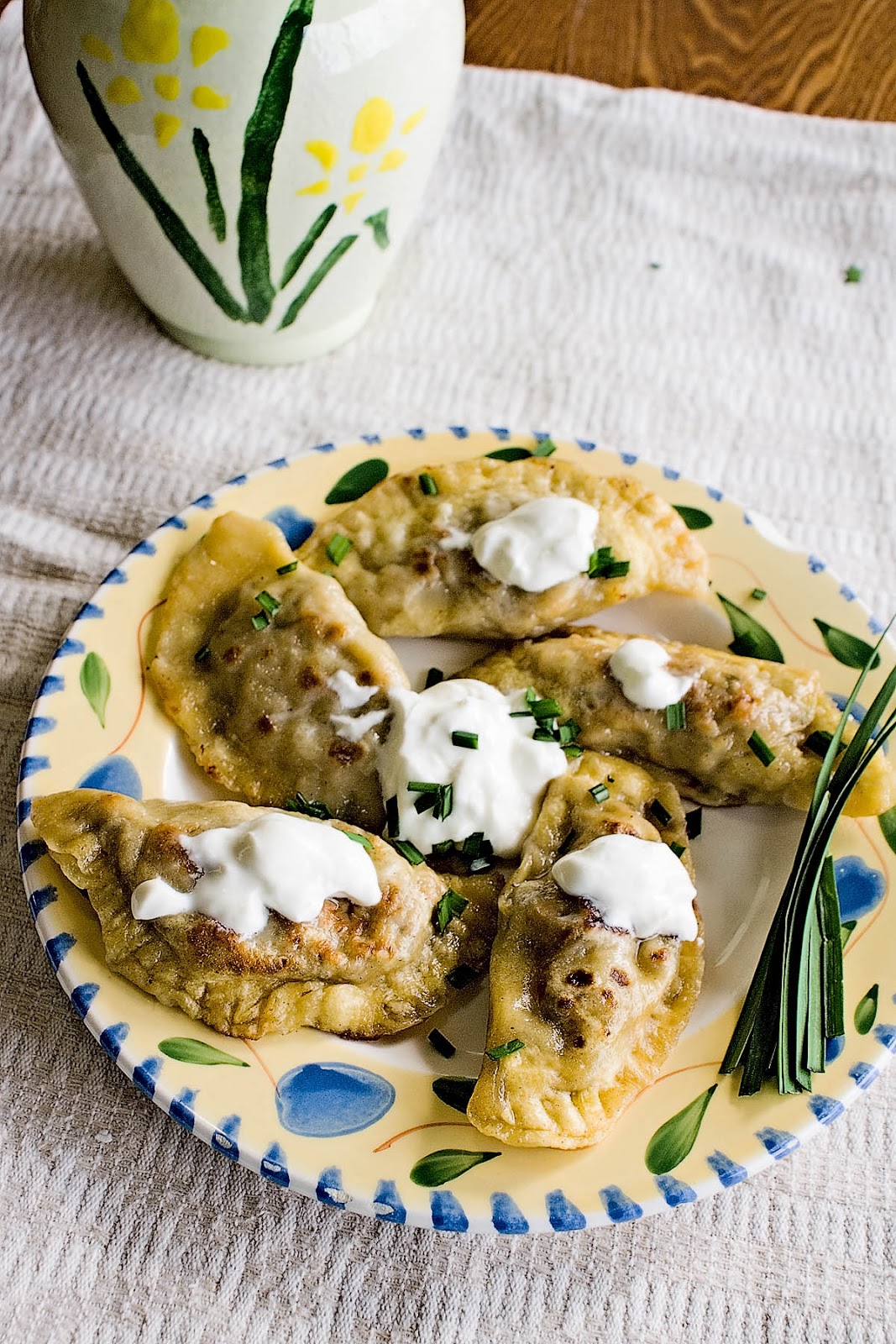
Pick-A-Filling Pierogi

>> Tuesday, March 31, 2015


Pick-A-Filling Pierogi
Pierogi, also called vareniki, perogi, perogy, piroghi, pirogi, piroshki, pirozhki, pyrohy, pielmieni, pierogies, pierogie, piroggen, and pelmeni. Whew!


Why would Joe and I try to cook pierogi when we can get them frozen in the store any day? Well, we had a couple reasons. First, we knew that  the Polish celebrate Christmas and Easter with special types of dumplings, and we wanted to get into the spirit of Easter by celebrating some other country's customs.

Second, Joe has been experimenting with different kinds of pasta dough, as you may have seen in our recipes like gnudi with wild mushrooms, gyoza dumplings, ricotta and chard gnocchi, and bacon-filled ravioli. Pierogi was a logical step.

Third, we all know that everything tastes better when you make it fresh, and when you customize it to your own tastes. That's why we've included some rather traditional pierogi recipes, along with our own variations. The wonderful thing about dumpling filling is you can throw in whatever you have or whatever you like - just make sure it's well chilled or stuffing will be difficult.

Our fillings for pierogies (below the photos):


Potato-Mushroom

Berries and Cottage Cheese

Potato-Cheese-Onion
(Pittsburgh or Ruskie style)

Apricot Compote

Beef and Vegetable

Sweet Prune (Lekvar)

Mushroom-Sauerkraut (Uzska)

Peanut Butter and Banana
(not traditional!)

Bacon-Swiss-Caramelized Onion

Kielbasa and Cabbage (Haluski-style pierogi)


Traditionally, Polish Catholics forsake meat products on holy days, especially in the 40 days of Lent before Easter, so potato, cheese, mushroom, sauerkraut, and fruit are often the favorite stuffing.

vareniki, perogi, perogy, piroghi, pirogi, piroshki, pirozhki, pyrohy, pielmieni, pierogies, pierogie, piroggen, pelmeni


I also read that people (perhaps in smaller villages) would bring their foodstuffs to the church before Easter and have the priest bless them. Then they would share their dishes with each other. I love the idea of a community getting together to share their foods and celebrate together. It reminds me of the community breakfast my church serves on Easter Sunday.

Polish Priest blessing Easter food baskets (Swiecone)
Priest blessing food baskets (Swiecone) the day before Easter
(thanks to http://www.polamjournal.com for the beautiful photo!)

While Joe and I did quite a bit of experimenting while making these, we got some initial help from the time-tested pierogi recipes of Tasting Poland. The writer shares her family pierogi recipes, along with all sorts of tips and tricks.

Ingredients - Pierogi Dough

3 cups white flour
1 tsp.salt
1 cup warm water
1 egg
2 tbsp sour cream
1 tsp. vegetable oil

Instructions - Pierogi Dough

In a large mixing bowl, stir together the flour and salt. Pour in the water while mixing vigorously.
Whisk together the egg, sour cream, and oil. Make a well in the middle of the flour, then pour in the egg mixture. Using a pastry cutter or two knives, blend the liquid into the flour mixture.

Turn out onto a floured work surface and knead until the dough is smooth and elastic - about 5 minutes. If the dough is too sticky, add a little flour; if it is too dry, sprinkle it with a bit of water.

Now sprinkle some more flour on your work surface and roll out the dough until it is about 1/8" thick. Try not to overwork the dough, or it will be tough after it's cooked. Cut out circles with a cookie cutter or cup.

Meat and potato-cheese pierogi ready for boiling.
Step 1: Roll out your dough and fill the dough circles. These are potato-cheese and meat-veggie pierogi.


Place a heaping tablespoon of filling onto one half of the circle, then wet the edge with a little water so the dough will stick together. Fold over the other half of the dough and pinch the edges shut.


Cooking Pierogi
Step 2: Boil the pierogi 5-8 minutes


Heat a large pot of boiling water, drop in 1/3 of the dumplings, and give them a gentle stir. Boil 5-8 minutes - the pierogi should pop up to the top about halfway through the cooking time. If you're watching the pot, you can time the second half of the cooking by the time they bob to the surface.

While they're cooking, if you'd like to toast them before eating, heat up a little oil in a pan on medium heat. Drop in the pierogi after you've strained them out of the water, and cook 2 minutes on each side, or until nicely browned.

Browned pierogi
Step 3: Brown the pierogi in some oil or butter. These are Haluski-style pierogi, with kielbasa and cabbage.

Whether you want to fry the pierogi after cooking or not, we really like serving these with a dollop of sour cream, regardless of the filling. Some people pour melted butter over them, and top with fried onions. Delicious.

 Makes about 30 stuffed pierogi.

Pierogi Filling Recipes

Potato and Mushroom

2 cups diced potatoes
1/2 cup milk
2 cups chopped mushrooms
1/2 cup chopped onions
1 tbsp butter or oil
1 tsp powdered garlic
Salt and Pepper to taste

Boil or steam the potatoes until tender, then mash with the milk until smooth. In a skillet, saute the vegetables until tender, then stir in the garlic, salt and pepper, and potatoes. Chill until cold, then stuff into pierogi.

Potato-Cheese-Onion (Pittsburgh or Ruskie pierogi)

2 cups diced potatoes
1/2 cup milk
1 1/2 cups Cheddar cheese, cubed, or fresh Farmer's cheese (more traditional)
1/2 cup chopped onions
1 tbsp butter or oil
1 tsp powdered garlic
Salt and Pepper to taste

Boil or steam the potatoes until tender, then mash with the milk until smooth. Stir in the cheese cubes, cover with a lid, and let sit for 15 minutes or until the cheese is melted. In a skillet, saute the onion until tender, then stir in the garlic, salt and pepper, and potatoes. Chill until cold, then stuff into pierogi.


Mushroom and Sauerkraut

2 oz. dried mushrooms, rehydrated, or 2 cups chopped fresh mushrooms (porcini, morels, or chanterelles are very good here)
1 onion
1/2 tsp dill
2 cups sauerkraut, rinsed and well-drained
1 tbsp butter

Chop the onion and mushroom well, then saute in the butter until tender. Chop the sauerkraut and dill and stir into the mixture. Chill until cold, then stuff into pierogi.

Beef and Vegetable

1/2 lb ground beef
2 carrots
1/2 cup fresh parsley
1 leek
1 celery stalk
1 onion
butter or oil for frying
1/2 cup bread crumbs
1 egg, beaten
1/4 cup water or broth
Salt and Pepper to taste

Brown the ground beef in a large skillet. Set aside. Finely chop the vegetables, then saute in the oil until soft. Stir in the rest of the ingredients, then transfer to a blender or food processor. Process until the mixture has a uniform texture similar to large crumbs. Chill until cold, then stuff into pierogies and cook away!

Bacon-Swiss-Caramelized Onion

1/2 lb bacon
1 cup chopped onions
1 cup Swiss cheese
1/4 cup melted butter
1/3 cup bread crumbs
Salt and Pepper to taste

Fry the bacon until crisp, then drain on paper towels. Cook the onions in the bacon grease, then drain and place in a bowl. Chop up the bacon and add it to the onions. Shred the cheese, then add the cheese, butter, bread crumbs, salt and pepper to the mixture. Chill until very cold, then stuff the pierogi.

Kielbasa (Haluski-style Pierogi)

1/2 pound Polish Kielbasa sausage
1 tsp oil
1/4 cup butter
1/2 cup chopped onions
1/3 cup chopped celery
2 cups shredded green cabbage

Dice the kielbasa. Heat the oil in a large skillet, then add the kielbasa and cook until warm and slightly browned. Remove to a mixing bowl, then melt the butter in the skillet. Add the rest of the ingredients, and cook over low heat until tender. Add to the kielbasa and stir well. Chill until cold, then stuff into pierogi.

Berries and Cottage Cheese

4 cups raspberries, blueberries, sliced strawberries, bilberries, or other fruit
1 cup small curd cottage cheese
1/4 tsp nutmeg

Put the cottage cheese in a colander and press out the liquid. Stir together all ingredients, then chill until very cold. Stuff into pierogi.

Apricot Compote

12 oz. dried apricots
1 cup water
1 tsp lemon zest
1/4 tsp almond extract
2 tbsp brandy
1 tbsp melted butter

Place the apricots, water, and lemon zest in a small pan. Bring to a boil, reduce heat, then simmer until soft - about 20 minutes. Drain the water, then transfer to a blender or food processor. Add the rest of the ingredient, then process into a thick chunky jam. Chill well before stuffing into pierogi.

Sweet Prune (Lekvar)

2 cups dried, pitted prunes
1 tablespoon lemon juice
1 tablespoon brown sugar

Put the prunes in a pan and cover with hot water. Let them soak 1/2 hour, then drain them. Add the lemon juice and sugar and simmer, stirring occasionally,  until it forms a chunky paste. Chill until cold, then stuff the pierogi.

Peanut Butter and Banana

2 ripe bananas
1 cup peanut butter
2 tbsp cocoa powder (optional)

Slice the bananas into disks, then place one or two disks onto each dough round. Top with a few teaspoons of peanut butter. After boiling, fry these in butter and then sprinkle with the cocoa powder.


Make lots of pierogi - and then freeze them for later!

Read more...

Marinated Pepper and Onion Salad

>> Friday, March 20, 2015


Marinated Pepper and Onion Salad


Joe and I love shopping the discount produce at our local ethnic grocery store, and finding deeply reduced foods that absolutely have to be used today. This challenges us to whip up something special without having anything planned in advance, and play with what we have available. Sometimes we rise to the challenge, other times we flop.


We found a pack of mixed bell peppers the other day for about 10 cents a pepper, which is a great deal for Chicago at the end of March. The same store had red pearl onions for $1 a pint, another good bargain! We roasted the peppers and onions, then Joe whisked together a tasty pomegranate vinaigrette to marinate them. After I composed the salad, I had a taste and realized the flavors weren't balanced. Too sweet. It needed something piquant to make it pop. Some leftover Kalamata olives and capers were the perfect finish.

Speaking of finish, we finished all this salad for dinner. No leftovers, unfortunately.

Ingredients

For the marinade

1/2 cup olive oil
1/3 cup pomegranate balsamic vinegar
1 tbsp fresh lemon juice
1 1/2 tsp fresh marjoram, snipped
1/2 tsp tarragon, snipped
1/2 tsp powdered garlic
1 tsp ground black pepper

For the salad

3 red bell peppers
3 orange bell peppers
1/2 pint pearl onions, peeled, or 1 large red onion, peeled and thickly sliced
6-8 cups mixed salad greens
2 tbsp pickled green capers
1/4 cup sliced Kalamata olives
4 oz. Romano cheese, shaved

Directions 

Whisk together the marinade ingredients and let it sit at room temperature.

Heat the broiler or grill. Place the peppers and onions on a broiler pan or cookie sheet, or place them directly on the grill. Broil or grill close to the heat until the exposed side is blotchy, black, and peeling. Turn over the peppers and onions and roast until both sides are blistered and the skin is blackened.

Roasting red peppers


Place the vegetables in a paper bag and allow to steam for 30 minutes. This will help you peel the blackened parts off. When finished steaming, cut off the stem and scrape the charred skin and seeds off with a knife. Cut the peppers into thin strips and let drain in a colander for 15 minutes.

Put the peppers and onions in a bowl and cover with the marinade. Allow to sit at room temperature for at least 30 minutes. You can do this part up to several days ahead of time and refrigerate it if you want, but be sure to serve the marinated vegetables at room temperature for the best flavor.

Divide the salad greens and arrange them on six separate plates. Top each plate with 1/6 of the pepper/onion mixture, and divide the marinade between all the plates. Sprinkle with the capers, olives, and cheese before serving.

Serves 6 as side dishes.

Read more...
Related Posts Plugin for WordPress, Blogger...

  © Blogger template Simple n' Sweet by Ourblogtemplates.com 2009

Back to TOP