Showing posts with label German. Show all posts

Rouladen - German Stuffed Beef Rolls

>> Sunday, April 22, 2018
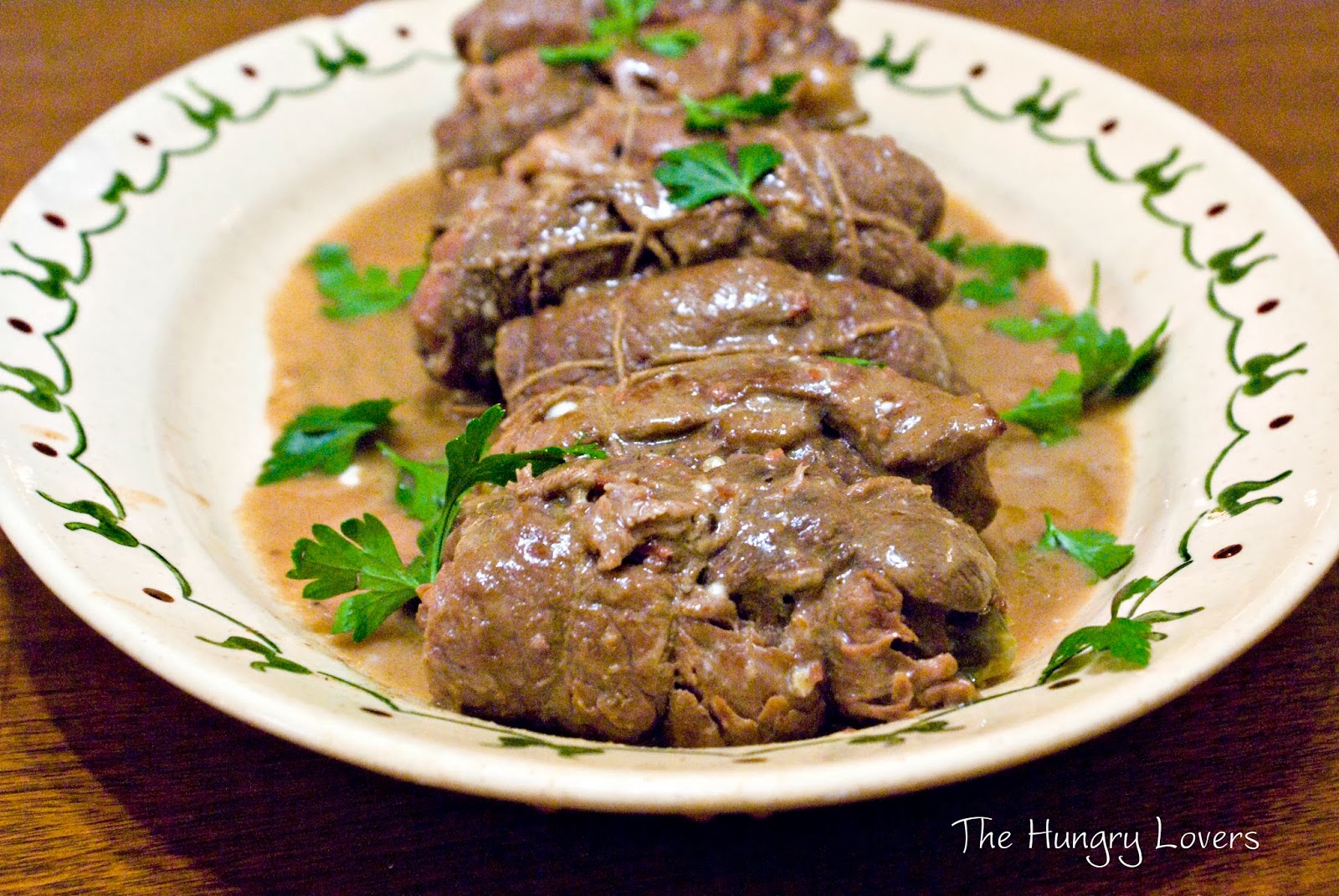


Rouladen - German Stuffed Beef Rolls


This is a classic German recipe that I learned from an American family that lived in Germany for some time. The first version is their rather Americanized (but still delicious) version.

The second recipe is a more authentic German version; we learned it at a German cooking class at the DANK Haus - the German-American Cultural Center in Chicago.

These beef rolls can be served with German spaetzle, egg noodles, dumplings, or mashed potatoes.

Version #1

Makes 6 Servings

Ingredients


1 1/2 pounds round or flank steak
German stone ground mustard, to taste
1/2 pound thick sliced bacon
2 large onions, chopped
1 (16 ounce) jar tiny dill pickles
1 can cream of mushroom soup
1/2 cup sour cream

Rolling German Beef Rolls

Instructions

  1. Cut the flank steak into thin filets; about 1/4 inch thick and 3 inches wide. Generously spread one side of each filet with mustard to taste.
  2. Place bacon and pickle on each filet and form into a roll. Use string or toothpicks to hold the roll together.
  3. Heat a skillet over medium heat. Brown the rolls on all sides.
  4. Place rolls into a crock pot and add the chopped onions. Pour the mushroom soup and 1/2 can of water over the rolls.
  5. Simmer for four hours, or until tender.
  6. After removing the beef rolls, make a gravy by stirring the sour cream into the soup mixture. Serve the rolls with the gravy on the side.
Version #2

Makes 6 servings

Ingredients

1 1/2 pounds flank steak
German stone ground mustard, to taste
1/2 pound thick sliced bacon
2 large onions, sliced
1 (16 ounce) jar dill pickle slices
2 tablespoons butter
2 1/2 cups beef stock
1/2 cup dry red wine
1 tablespoon cornstarch
1/3 cup sour cream

Rouladen ready for cooking

Instructions

  1. Cut the flank steak into thin filets; about 1/4 inch thick and 3 inches wide. Generously spread one side of each filet with mustard to taste.
  2. Place bacon, onions and pickle slices on each filet and form into a roll. Use string or toothpicks to hold the roll together. 
  3. Heat a skillet over medium heat and melt butter. Place the rolls in the butter and saute until browned.
  4. Pour in beef stock and wine and stir.
  5. Simmer the rolls for at least an hour.
  6. After removing the beef rolls, stir in 1 tablespoon of cornstarch and bring to a boil, stirring the liquid until thickened. Serve gravy over the rolls or on the side.

Read more...

Red Wine-Marinated Pot Roast

>> Sunday, February 11, 2018


Red Wine-Marinated Pot Roast

This red wine-marinated pot roast is an old-fashioned recipe with ties to both Germany and France. The juniper berries and cloves are typical of a German beef roast, while the cloves and bay leaves are more typically provincial French. Joe thinks this is the most flavorful, rich way to cook a pot roast, and the herbs and seasoning make it a bit different. This is perfect for a special dinner party or a nice weekend supper.

Start the recipe one a day ahead so that the beef marinates in the red wine sauce for a good long time. Slowly braise the beef the next day with some hearty root vegetables like carrots and onions and you'll enjoy the smells wafting from the kitchen all afternoon. I bet you won't even need to call the family to dinner - they'll be sitting there waiting for it.

When we made this pot roast for Sunday night dinner, we used my great-grandma Therese (Hopfner) Detzner's cream-and-gold china. Seems a shame to just store the china in the cabinet all the time.  I'm sure my very German ancestors would have loved this German-inspired recipe, too.

Ingredients

For the Marinade

2 cups dry, medium bodied red wine (try a pinot noir, syrah/shiraz, or cabernet sauvignon)
1/2 cup carrot, cut into matchstick pieces
1/2 cup onions, very thinly sliced
1/2 cup celery, cut into matchstick pieces
2 garlic cloves, smashed
3 whole cloves, or 1 tsp ground cloves
2 bay leaves
1 tsp whole juniper berries, or 2 tbsp gin (look for juniper berries in a jar at a Whole Foods, Trader Joe's, or  specialty store; keep them in the fridge or freezer for future recipes I will share with you)

For the Roast

3-4 lb nicely marbled boneless chuck, eye of round, or shoulder roast
2/3 cup olive oil
2 large yellow onions
4 large carrots
4 cloves of garlic, minced
6 large potatoes
2 cups beef broth
1/2 cup cornstarch
salt and pepper to taste

Directions

Mix together all marinade ingredients in a non-reactive bowl. Place the meat in the bowl and turn in over several times to coat it with the marinade. Cover and refrigerate until ready to cook (at least 4 hours, but it is best if it marinates for a whole day).

Preheat the oven to 300 degrees.

Drain the meat, retaining the marinade. Pour 2 tbsp of oil into a dutch oven or large pot. Heat the oil, then sear the meat on all sides until well browned (a few minutes per side, including the short sides and ends). Pour the marinade over the meat, cover, and place in the oven. If you prefer to cook this on the stove, bring the marinade to a boil, then reduce heat as low as possible and allow to simmer. Cook the roast for 3 hours, turning and basting occasionally, and adding a little water if the liquid gets very thick or falls below 2" .

Near the end of this cooking time, peel the onions and carrots. Slice the onions into small wedges. Heat 2 tbsp of oil in a frying pan, then brown the onions on all sides. Remove them to a plate or bowl. Slice the carrots into 1" wide pieces on a bias. Heat up 2 more tbsp oil and brown them quickly on all sides. Add them to the onions.

Add the onions, carrots, and 2 of the garlic cloves to top of the meat. Do not mix the vegetables into the pot, or they will get brown and mushy. Cook for 45 minutes more.

In the last 30 minutes of the cooking time, scrub the potatoes and cut them into 2" pieces. Heat the last of the oil and add the potatoes. Brown them on all sides, then add the last two garlic cloves. Add 2 tbsp of water and cover the frying pan. Reduce the heat to low and allow the potatoes to cook slowly.

Remove the roast and set it on a carving block. Discard the cloves, berries, and bay leaves. Strain the vegetables out of the pan juices and put them into a bowl to keep warm in the oven. Pour the cooking liquid back into the pan and add the beef broth. Bring to a boil. Stir together 1/2 cup cold water and the corn starch. Slowly pour it into the broth, stirring constantly. Continue to boil until the broth becomes a thick gravy.

Serve hearty slices of the roast with the sides of vegetables and potatoes, and plenty of gravy. Dinner rolls are great for sopping up the extra sauce.

Serves 6-8.

Read more...

Red Cabbage and Apples in Red Wine Sauce

>> Friday, October 7, 2016

red cabbage and apples sauteed in red wine


Cabbage is not one of those things you find in our house on a regular basis. Joe has a childhood block against cabbage, but likes a bit of mild sauerkraut, cole slaw, or some of those kinder, gentler cabbages like Napa or Bok Choy.

I loooooovvvveee cabbage. Oh, how I love corned beef and cabbage, Reuben sandwiches, or any form of sauerkraut or coleslaw or that cabbage salad with the crispy ramen noodles and almonds. My problem is, cabbage doesn't like me at all. It's delicious, but not quite so fun later on.

Oh, then we found this recipe. Glorious violet cabbages with glossy skins are burgeoning in our stores, and we had some sharp and sweet apples better for cooking than eating out of hand. We had to at least give them a try, and we've made it twice more in the last six weeks.

This is a traditional German recipe but I bet lots of other cold-weather countries have found the same sort of combination of sweet-sour cabbage that simmers out the harsh taste. I'm pretty sure this will be on our table until fresh cabbages are no longer in season.

Ingredients

2 tbsp butter
1 tbsp sugar
1 cup sliced onion
2 Granny Smith or other tart apples, peeled, cored, and coarsely chopped
6 cups shredded red cabbage (this is about half of a large red cabbage)
1/4 cup red wine vinegar
2 cups beef broth
Salt and pepper to taste
1 bay leaf
2 tbsp flour
1 cup red wine

Instructions

In a large skillet, melt the butter. Stir in the sugar until melted. Add the onion and apples saute until tender, about 5 minutes. Turn up the heat and add the cabbage, glazing them with the butter and sugar.

braising Red Cabbage and Apples


Add the bay leaf, salt and pepper, then pour in the red wine vinegar and 1 cup of the beef broth. Bring to a boil, then reduce heat and simmer 20 minutes, until the cabbage is starting to get tender. Sprinkle with the flour and stir well.

Sprinkle the flour over the cabbage and toss well to mix. Stir in the wine and the remaining broth. Simmer gently for a few minutes, until the sauce is thickened. Remove the bay leaf and serve.

Serves 6 as a side dish.

Read more...

Pork Medallions and Mushrooms in Brandy Cream Sauce

>> Monday, September 12, 2016


This is one of those absolutely exquisite dishes that I dream about for weeks after tasting it. If you really want to make a special meal for someone, this is the one to make. I made it for Joe's birthday this year and it was a very happy birthday for him!

The New German Cookbook, where we got the inspiration for this recipe, translates the dish as Schweinemedaillons en Weinbrand-Sauce. I confess I don't know how to pronounce this, though I should know more German than how to be polite and order a beer.

Anyway, the sauce is the most exquisite part of this dish. Once I cleaned my plate, I ran my finger over the dish to get the last bits of gravy. The night we made this, I intended to make fresh egg spaetzle (tiny German dumpling-noodles), but it was getting late, so I just cooked up some rotini. It was a mistake. Please, please go all the way and make the spaetzle, which is more tender than pasta and will soak up the luscious sauce. It's really not hard to make spaetzle. My family recipe is here: Detzner Spaetzle Recipe.

This would also be good over mashed potatoes or rice, instead of spaetzle.

Ingredients

1 pound pork tenderloin, sliced 1/2" thick
4 tbsp butter
1/4 cup brandy
1/4 cup white wine
1/2 cup beef broth
1 pound mushrooms, cleaned and thinly sliced (the recipe book called for Black Forest or Polish black mushrooms; we used baby portobellos)
1/4 cup onion, finely chopped
1 garlic clove, minced
2 cups half-and-half
Salt and pepper to taste

Directions

Preheat the oven to 200 degrees.

Melt 2 tbsp of the butter in a large skillet, then brown the pork on both sides over a medium-high heat. Set in a baking dish and cover with foil, then keep it warm in the oven.


Pan-roasting pork loin medallions


Pour the brandy and wine into the skillet and simmer over medium heat, scraping up the browned bits. Add the broth and boil, uncovered, until reduced by half. Pour the brandy mixture over the pork and return it to the oven.


Pork medallions and mushrooms roasting in juices


Melt the last 2 tbsp of butter in the skillet, then saute the mushrooms, onion, and garlic until soft. Add the pork and sauce back into the skillet, then stir in the half-and-half. Simmer on low for 10-15 minutes, until the cream sauce thickens and reduces by half. Add salt and pepper to taste, and serve with rice, noodles, or potatoes.

Serves 4-6.

Read more...

Spaetzle with Swiss Cheese

>> Monday, October 5, 2015


Spaetzle dumplings


After eating spaetzle my whole life, a favorite recipe of my grandmother's, I was startled to find that the culinary world is now into spaetzle. It's popping up on menus and in food magazines all over the place.

If you haven't heard of spaetzle before, they are little noodles or dumplings made of flour, milk, and egg pressed through a colander or spaeztle press. My sister brought me an authentic Kull metal press from Germany 30 years ago. We also use it for juicing lemons and limes.

Kull Spaetzle Press

People pronounce it either SHPET-zul or SHPET-zlah or SHPET-zlee (regional differences, maybe?). They can be fluffy or a little chewy, depending on the cook and the recipe. Spaetzle can be used in place of any starch like pasta, polenta, egg noodles, dumplings, mashed potatoes, or rice. I loved it when my mom or my grandma made a savory pork roast with plenty of gravy poured over all those little noodles.

But spaetzle with Swiss cheese is a long-time family favorite which is also a main dish that's cheap and quick to make. It's a German version of mac and cheese, really. Like all family recipes that are passed along for years, people in my family make it slightly differently. My mom makes a very simple version; my Aunt Monica browns butter very darkly before tossing with the noodles, and we like to add pepper and garlic and a bit of seasoned bread crumbs because, well, you know we love more flavor.

At the famous Mader's Restaurant in Milwaukee, and the Chicago Brauhaus, I've had spaetzle that was pan-fried as a side dish. I've tried pan-frying the noodles in butter after boiling them, and it works particularly well with the grated cheese. You might want to try it both ways and see what you like best.

This basic spaetzle recipe is just a start. Try adding chopped herbs or spices, or some mustard, or sour cream, for extra flavor, as it suggests in this Chicago Tribune article on spaetzle.

Ingredients

Basic spaeztle noodles

4 eggs (my mom estimates 1 egg per person)
1/2 cup of milk, plus extra for consistency
3 cups of flour
1 tsp salt
1 tsp pepper (optional)
1 tsp garlic powder (optional)

For the topping

4 cups grated Swiss cheese (measure after grating)
4 tbsp butter
1 cup Italian seasoned breadcrumbs (optional)

Directions

Whisk together the eggs and milk. In a separate bowl, stir together the rest of the ingredients. Slowly add the egg mixture to the flour mixture, stirring constantly. The batter or dough should be similar to a very thick, slightly sticky bread dough, depending on how tender or chewy you like the dumplings. After you make it a few times, you'll figure out the consistency you want. Add more milk or water if you want to adjust the texture.

Spaetzel dough


If you want light, fluffy noodles, stop stirring as soon as the ingredients are combined; for firmer noodles, stir for five minutes before cooking.

Heat a pot of water to boiling. Place a large scoop of the dough in the colander or spaetzle maker and press the dough through the holes. They should fall through in a solid stream; you may have to cut off the noodles to free them from the holes. Stir the noodles immediately to keep them from sticking together.

Kull Spetzle Press

Boil for 5 minutes, then drain well. Repeat with the rest of the dough, while keeping the finished noodles warm.

If you want to pan-fry the noodles after they are cooked, heat up the butter in a frying pan until the foaming stops. Dump in the noodles and stir them around so they're coated with butter. Cook until golden brown on one side, then flip over and brown the other side.

Otherwise, melt the butter and stir into the noodles. Toss the noodles with the Swiss cheese, then sprinkle with the breadcrumbs before serving.

My mom always serves Spaeztle With Swiss along with homegrown peaches she canned herself, and I can't improve on that combo.

Serves 4-6 as a main dish, 8 as a side dish. 


Read more...

Braised Beef Shanks, Northern Germany-Style

>> Tuesday, December 2, 2014


Braised Beef Shanks, Northern Germany-Style

If you were traveling along the northern coast of Germany, on the North Sea side or the edge of the Baltic Sea, you might come across this creamy and substantial meal of beef shanks, bacon, vegetables, and sour cream. You might need a meal that fortifies your belly, too - the winds and snow hitting coastal towns make one crave something hearty for dinner.

This dish satisfies, and it's one you can prepare and then braise until you're ready to serve it, depending on the temperature of your oven or crockery cooker.

Ingredients

1/4 pound thickly-sliced bacon, diced
3 pounds beef or veal shanks, cut about 2 inches thick
1 large onion, peeled and chopped
1 large carrot, peeled and chopped
Salt and Pepper to taste
1 tsp thyme
2 tsp marjoram
1 cup beef broth
1 cup sour cream
3 tbsp flour

Sauté the bacon until tender but not crispy. Set on paper towels to drain. Put the beef shanks in the pan and brown on all sides. Place in a Dutch oven, roasting pan, or slow cooker. Add the vegetables, bacon, and herbs. Pour the beef broth over the meat and put the lid on the pot.

Cook at an even temperature until you are ready to eat. The meat should be fork-tender but not falling apart. With a 250 degree oven, or a crock pot on low heat, you could cook this for 6 to 8 hours, or it will be done in 1 1/2 to 2 hours in an oven at 375 degrees.

When done, take out the meat and put it on a platter, covering it with foil to keep it warm. Leave the vegetables in the pan. Skim the fat from the pan drippings and add 1 cup hot water. Bring to a boil, then reduce heat until barely simmering.

Whisk the sour cream with the flour until smooth, then stir into the pan drippings until smooth. Heat this sauce without boiling for 3-5 minutes, then pass the sauce with the meal.

Serves 4-6.

Read more...

German Potato Pancakes (Kartoffelpuffer)

>> Monday, December 17, 2012


German Potato Pancakes
Thanks to Lori Stalteri for taking this photo for me.

I have to be honest with you: I don't like some of the traditional German potato pancakes. My grandma (God rest her merry soul) and many before her made them with raw grated potatoes that somehow turned a little gray and gooey in the middle. It just wasn't appetizing or flavorful enough for me.

But I have tasted superb ones in German restaurants like the Brauhaus in Chicago and Mader's Restaurant in Milwaukee, and a cute little local place called The Swedish Cafe. If I like fried potatoes, onions, sour cream and applesauce, surely there must be a way to combine this in a way I enjoy.

Every Christmas, we have a tradition of meeting my daughter and her boyfriend in Daley Plaza for Chicago's Christkindlmarket, and we always share a big plate of pancakes with sour cream and applesauce on the side, and mugs of beer and mulled wine. After our annual trip last week, I was craving them again.

Joe experimented until he came up with the most marvelous potato pancakes I've ever tasted. His trick is to cook the potatoes slightly before draining and frying, and he added the traditional German flavorings of lemon, caraway, and onion to the basic recipe. Next summer, we're going to try these with fresh zucchini, too.


These are filling enough for a whole meal, which is what I ate for dinner that night, along with a bowl of organic applesauce I canned this summer. Joe, being a meat and potatoes man, added some leftover pork carnitas to his pancake plate.

Ingredients

2 lbs (about 6 cups) shredded russet potatoes (we shredded them with the skin on for more fiber & flavor)
1 medium yellow onion, peeled and minced
2 tbsp lemon juice
1/4 cup flour
1 tsp ground caraway seed
2 tbsp chopped fresh parsley
1 tsp ground pepper
2 tsp salt
2 eggs or 1/2 cup egg substitute
1/4 cup vegetable oil (for frying)

Directions

After shredding the potatoes, put them in a colander and rinse them until the water runs clear, to remove some of the white or pinkish starch that will prevent them from crisping. Place potatoes in a large saucepan and cover with water. Bring it to a boil, cover, and simmer 5-10 minutes, until slightly tender. Drain the potatoes in a colander and allow them to cool.

Place 1/4 of the potatoes into a clean, absorbent dish towel, roll up the towel, and wring out all of the excess water into the sink (this ensures the pancakes will not be gummy or doughy). Place the dried potatoes into a large mixing bowl and repeat with the remainder of the potatoes.

Stir in all the rest of the ingredients, except the oil. Heat a large frying pan, then add 1/2 of the oil and spread it around the pan. Scoop out 1/4 cupfuls of the potato mixture and place it in the pan. Use a spatula to press it into a pancake shape. Cook each pancake for 2-3 minutes on each side, until golden brown and cooked through. Use more oil as the pan becomes dry.

As the pancakes are cooked, place them in a single layer on paper towels and keep them on a warm platter in the oven until they're all done.

Makes about 25 1/4-cup pancakes.

Read more...

Murbteig Pie Pastry

>> Wednesday, November 21, 2012


Murbteig Pie Pastry

I have to admit that I've always hated making pie crust. Like other cooking chores, such as handling raw meat, Joe was the one willing to coddle along a pie crust so that it wasn't worked too hard (and became tough), or split and crumbled in all directions.

But then Joe started working tremendous hours in his small business, and my craving for quiches and pastys (if you don't know what this is, the recipe is coming up soon) went unfulfilled. Around that time, I discovered this easy German pastry recipe that makes a flaky, delicate, full-flavored crust. Even better, it will handle just about any amount of rolling and primping and re-forming without getting chewy and hard. It absorbs fruit juices without getting soggy.

I'm smitten. I can't find enough reasons to roll out this dough. I hope you like it, too.

The recipe makes enough pastry dough for a double-crust pie. You can easily cut this recipe in half for a cheesecake, quiche or tart. If you're using this pastry to make a fruit pie, it's traditional to add a few drops of lemon oil or 1/4 tsp lemon zest along with the eggs.

2 1/2 cups sifted all-purpose flour
2 tsp baking powder
1/2 teaspoon salt
1 stick cold butter (do not substitute)
2 large eggs

Stir together the flour, baking powder, and salt in a large mixing bowl. Chop the butter into small pieces and sprinkle it over the top. With a pastry cutter or fork, cut the butter into the dry ingredients until the mixture resembles coarse meal.

Whisk the eggs in a separate bowl, then mix them into the dry ingredients until the mixture forms a smooth pastry. Wrap it in parchment or waxed paper and it let rest at room temperature for 30 minutes, so that it's easier to handle.

Cut the dough in half and roll each half out into a circle, or press it into a pie plate or springform pan with your fingers. Prick the bottom with a fork. Add any filling to the pan before adding the top crust and pinching together the edges.

Read more...

Pork Roast with Sauerkraut, Apples, and Onions

>> Wednesday, November 7, 2012

Pork Roast with Sauerkraut, Apples, and Onions

The German branch of my family came to Chicago in the early 1900s, and settled on the North side of Chicago in the Lincoln Square and West Rogers Park area. This are was heavily populated with German families, and the Hopfner branch of the family had a bakery at 4754 N. Lincoln Avenue where my grandmother worked as a kid.

My grandmother, Therese Detzner Tarr, was part of the first generation born in the U.S. Unfortunately, she came of age as World War II was beginning and anti-German attitudes were rampant. The trend was to assimilate into U.S. culture. I don't have a lot of German recipes, stories, or memories from the family, but one of my favorite meals from Grandma Tarr was pork roast with sauerkraut.

I've updated this recipe in a couple of ways. Joe, not growing up with much sauerkraut on his plate, doesn't like the strong tartness, so I drained and rinsed the kraut before cooking it. Also, I added apples and onions to the pot. It truly becomes autumn on a plate with these extra ingredients.

Ingredients

1 tbsp oil
3 lbs pork roast (any cut will do)
16 oz. sauerkraut
1 1/2 tsp carraway seed
2 cups yellow onion, thickly sliced
2 cups tart apple (Granny Smith, Jonathan, McIntosh), cored and cubed

Directions

Heat the oil in a large saucepan. Brown the meat on all sides.

Drain the sauerkraut and lightly rinse, if desired. Place the kraut in the bottom of a roaster pan, Dutch oven, or large crock pot. Sprinkle with half of the carraway seed. Place the apples and onions on top, then place the roast on top of the apples and onions. Sprinkle with the other half of the seeds. Cover.

Roast in the oven for 1 hour at 350 degrees, or until meat is tender. Add a bit of water if the pot becomes dry. If using a crock pot, cook on low heat for 6-8 hours or until meat is tender.

Serve by placing the fruit and vegetables on a platter, then topping with slices of the roast pork.

 Serves 6-8.

Read more...
Related Posts Plugin for WordPress, Blogger...

  © Blogger template Simple n' Sweet by Ourblogtemplates.com 2009

Back to TOP